

Author: Steve A Furman
-

The Second Mistake
The shot after a mistake is one of the most important one of any round. You hit a poor shot. The ball finds the trees, or the water, or buries in a bunker. What happens in the next 90 seconds determines whether you save par or make a double. Most golfers spend those 90 seconds…
-

Why Golfers Can’t Commit
I hear golfers say to themselves while addressing the ball, “Commit to the shot.” Or, after a poor shot, “I didn’t commit.” Commitment is essential to skilled performance; full stop. But commitment is mental, not mechanical, which means it usually ends up at the bottom of a long list of things to remember while holding…
-

Stop Thinking, Start Putting
Ever stand over a putt, thinking through every detail of your stroke, only to pull it badly? There’s a cognitive reason for that—and the research backing it up is fascinating. Psychologists and neuroscientists have been studying golfers’ brains for decades in an attempt to better understand why we can make a pure roll that finds…
-

Course Management: Before the Shot, Not After
Most golfers believe course management means avoiding trouble. Don’t three-putt. Don’t make double bogeys. Stay out of the water. This thinking isn’t wrong—it’s just incomplete. These are outcomes, things that happen after shots are played. Real course management happens before you ever address the ball. Consider the three-putt. The obvious solution is becoming a better…
-

Think Long, Think Wrong
Today I was paired with Doug and his wife Lea in one cart, and Ted with me in the other. All three of my playing partners were excellent golfers with great swings and a clear understanding of what it takes to play the game. Such a pleasure to play with. They taught me a lot.…
-

The Perfection Prison
Golf is a game of misses. Even the best players in the world are simply managing their mistakes far better than the rest of us. They also recover from a miss in astonishing ways. Ben Hogan said golfers should be satisfied with hitting just a few shots per round that feel absolutely perfect. Faultless golf…
-

Organized Golf
Every unmade decision, every misplaced item, every uncertainty creates what psychologists call “cognitive load.” Disorganization creates a constant background hum of anxiety, pulling you away from the present moment. Professional golfers understand this instinctively. Watch them on tour: everything has its place, every routine is repeatable, every detail is managed. This isn’t obsessive behavior; it’s…
-

Intentional Practice
The range lies to you. Repetition every 10-15 seconds, identical setup, zero consequences. The course tells the truth: extended time between shots, building your stance from scratch each time, no mulligans, every shot is different. The harder we try to control our swing, the more we interfere with what we already know. Mindless repetition—hitting ball…
-
50/50
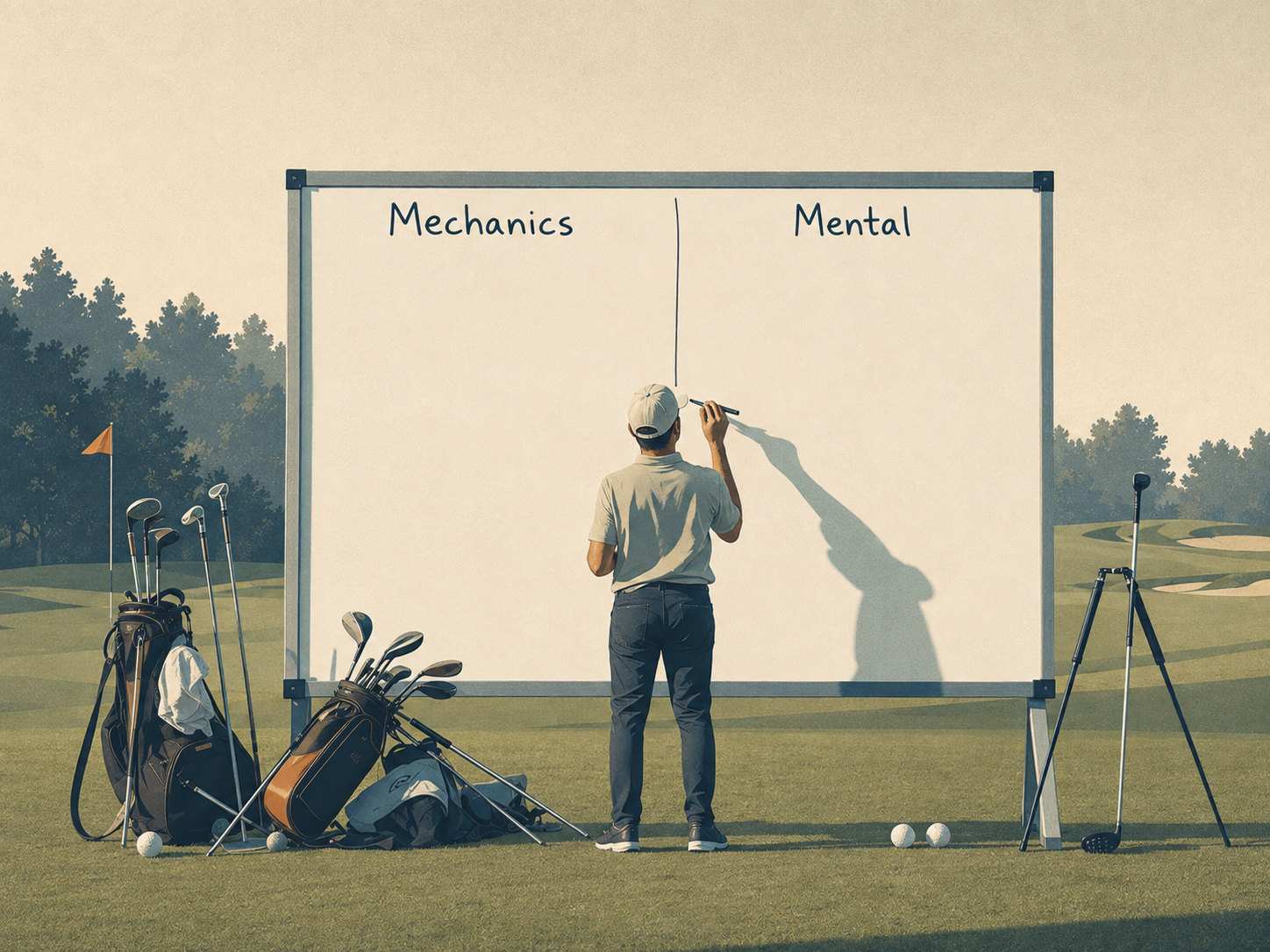
Try this exercise. Grab a piece of paper and draw a vertical line down the middle. Label one column “Mechanics” and the other “Mental.” Now list the things you practice in each category. Take your time. Be honest. The Disparity If you’re like most golfers, the mechanics column filled up quickly. Grip. Stance. Backswing. Weight…
-

What if You Didn’t Need to Think?
You’ve seen it a hundred times. A golfer misses a long putt by two feet, reaches out one-handed without a thought, and it finds the center of the cup. No read. No routine. No effort. It always seems to go in. Golfers joke about it: “I’ve made more putts one-handed than I can count.” But…
-

The Thinking Time Problem
A pitch crosses home plate in roughly 400 milliseconds. A professional baseball player must decide whether to swing, commit to the motion, and execute, all before conscious thought has time to interfere. There’s no room for analysis. No opportunity to second-guess. The body knows what to do, and the analytical mind stays out of the…
-

Why Tips Don’t Stick
You’ve done everything right. Watched the videos, taken the lessons, filled your head with advice from every credible source you could find. Grip pressure. Shoulder turn. Weight shift. Lag. Release. You know more about the golf swing today than you did a year ago. So why aren’t you playing better? The Paradox Here’s golf’s cruelest…
-

Stop Counting
Recreational golfers often focus on overall scores and future goals, which can create anxiety and distract them from the present moment. Effective golfers, however, concentrate on individual shots, recognizing each as an independent event. By thinking smaller—shot by shot—they reduce anxiety and improve performance, staying committed to the present. This approach allows for better execution,…
-

Cultivating Confidence
The post highlights the difference between fear and anxiety in golf. While fear is a reaction to immediate threats, anxiety anticipates potential future outcomes, leading to a fear-like response. Success in golf involves recognizing anxiety without judgment, allowing golfers to focus on their skills and maintain commitment despite the presence of anxiety.
-

Golf Consciousness
The PGA tour records extensive data on every shot, emphasizing the importance of both physical preparation and mental awareness in golf. Known as golf consciousness, this involves recognizing the thoughts and feelings that influence performance. By focusing on mental processes, players can enhance their game, utilizing awareness to improve their performance significantly.