

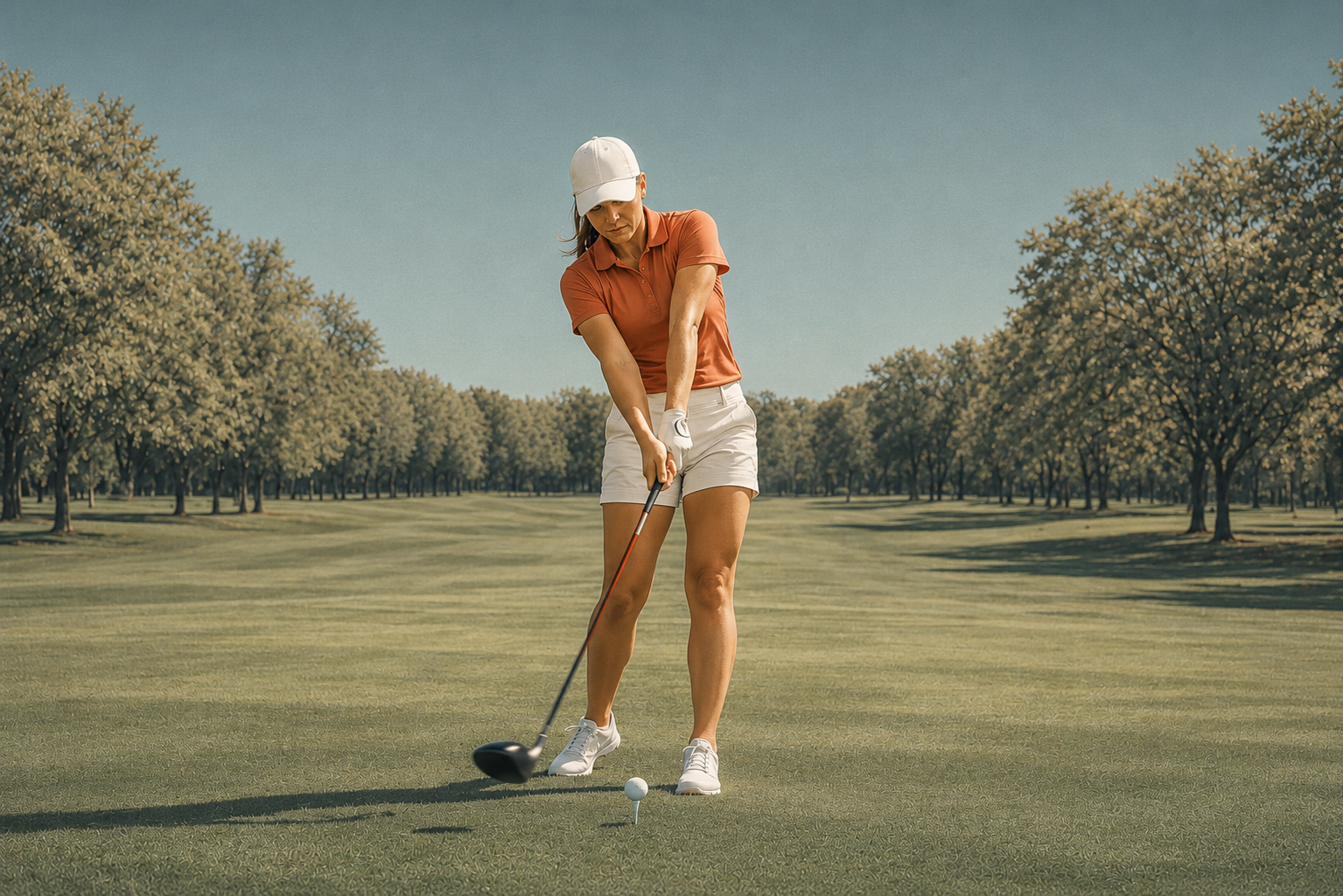
One of the things I study when watching tour players compete is their pre-shot routine. That process varies by player, but one thing I’ve noticed—especially on full shots—is how they make full and free practice swings, sometimes in slow motion. There is intention in those swings. They are not going through the motions.
I’ve observed a lot of recreational golfers over the decades and noticed two things done by nearly everyone. One is to identify a target, usually from behind the ball. The other is a practice swing. But their practice swings oftentimes don’t resemble the actual swing that follows. Some are obviously perfunctory—a quick waggle to get moving. Others don’t incorporate a follow-through at all; the club stops just past the point of impact and quickly recoils. They look nothing like the swing the golfer is capable of making.
What I Used to Do
When I was learning the game, I wasn’t paying close attention to what I did before hitting a shot. I would stand behind the ball and look out over the course, but I didn’t zoom in tightly on a specific target. And when I made a practice swing, I did so after I had already set my feet—which forced the practice swing to take a different path than my actual swing. The two weren’t connected.
If I watched a tournament that weekend and saw a top player I admired go through their routine, I sometimes copied it without really understanding why. I suppose I thought it might help, or at least look the part. I wasn’t taking my pre-shot routine seriously. I was borrowing the surface without grasping the substance.
A Ritual with Purpose
Now I have a very deliberate ritual when I approach a shot, and I would encourage you to develop one as well—but with a clearly stated purpose behind every step. Choose only the elements you can directly link to making solid contact. It takes some trial and error, but it’s worth the investment. Choose wisely and keep it simple.
For me, the single most important part of my pre-shot routine is a free and full practice swing made while standing directly behind the ball. It accomplishes two things simultaneously. First, I am standing in line with the shot I am about to hit—the swing path and the target are aligned from the start. Second, and more importantly, that swing is being run entirely by my intuitive mind.
I don’t think a single mechanical thought. No hand positions, no arm path, no hip turn. My only focus is to swing freely—as if nothing else in the world matters but that fluid motion.
What Changes When you Step-In
Here is what that practice swing does for the swing that follows. When you make a genuinely free and full swing behind the ball—unhurried, unforced, with no mechanical agenda—you are creating a neurological template. Your subconscious has just experienced the motion you intend to repeat. Your intuitive mind is now running the program.
When you step into the shot and address the ball, that feeling is still present. Your only task is to reproduce it. Not to think about it. Not to manage it. To trust it.
The swing that follows tends to be quieter. Freer. Less effortful. The analytical mind, which had been preparing the shot—reading the lie, selecting the club, committing to the target—has completed its work. It hands control to the intuitive mind, which already knows what to do because it just did it.
Solid contact becomes less of a goal you are chasing and more of a natural consequence of a swing allowed to be itself.
I am Not Hitting a Golf Ball
This single shift in approach transformed my entire construct of the game. The practice swing behind the ball is not a rehearsal. It is not a reminder. It is the swing—made without consequence, without interference, without the weight of outcome pressing down on every muscle.
When I step into the shot carrying that feeling, something fundamental has changed. I am no longer trying to hit a golf ball. I am swinging a club.
That distinction sounds small. It is not. Hitting implies force, intention, a target to be conquered. Swinging implies motion, rhythm, and trust in what the body already knows how to do. One invites the analytical mind to take over at the worst possible moment. The other lets the intuitive mind finish what it started.
Your best swing is already in there. The free practice swing behind the ball is simply the key that unlocks it.
Leave a Reply